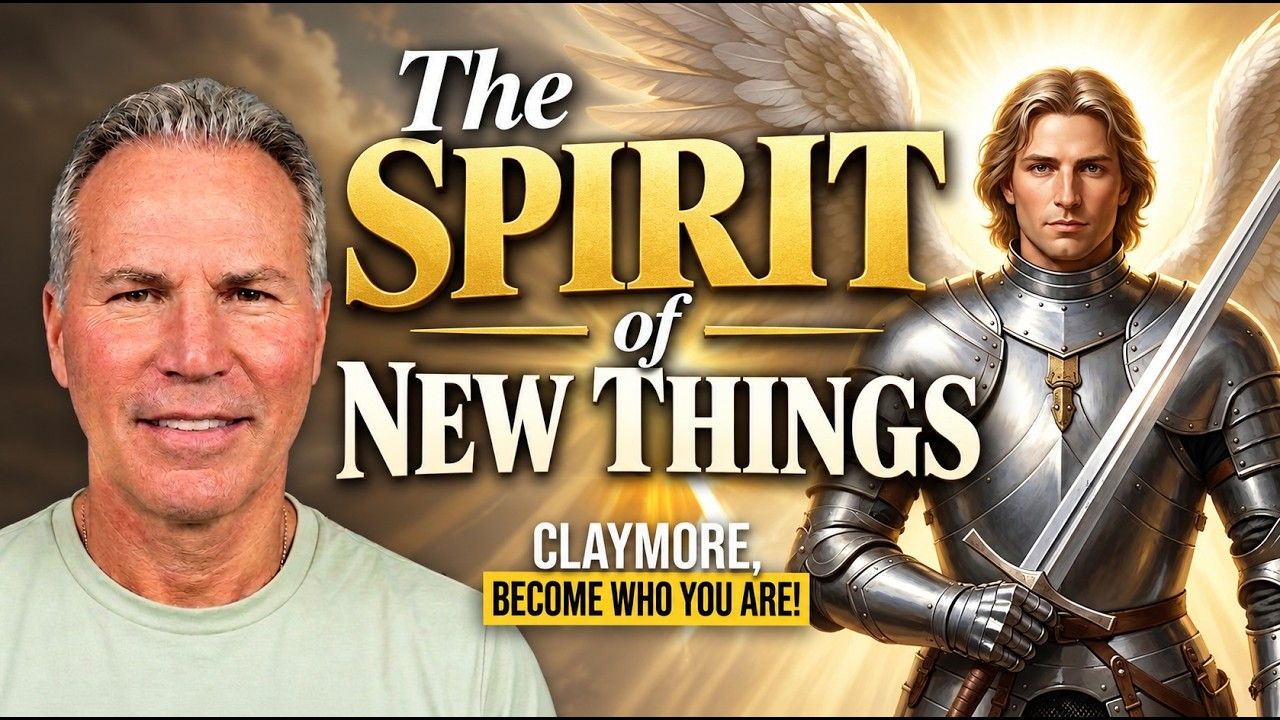
The Spirit of New Things: Leo XIII, John Paul II, and the Battle for the Human Person
By Jack Rigert··
There are moments in history when the world does not merely change around us; the very way people understand the human person, the family, society, freedom, authority, and even reality itself begins to change. We are living through such a moment. Artificial intelligence is developing at astonishing speed. Social media has transformed the way we communicate and increasingly the way we understand ourselves. Smartphones place nearly unlimited information—and temptation—in the palm of a child's hand. Technology is changing work, education, relationships, sexuality, economics, politics, and even our understanding of what it means to be human. For many young people, this is simply the world they inherited.
But the Catholic Church has confronted revolutionary change before.
More than a century ago, Pope Leo XIII looked upon a world being transformed by industrialization, revolutionary politics, economic upheaval, socialism, capitalism, urbanization, and the growing power of the modern state. A hundred years later, Pope St. John Paul II looked back upon Leo's response and recognized something remarkable: the particular circumstances had changed, but the fundamental question had not. How does the Church engage a rapidly changing world without losing sight of the permanent truths about the human person? And how do we distinguish between those things society is free to change and those realities society must first receive and recognize?
That question is as urgent today as it was in 1891.
In 1991, commemorating the hundredth anniversary of Leo XIII's great social encyclical Rerum Novarum, John Paul II wrote in Centesimus Annus:
“Towards the end of the last century the Church found herself facing an historical process which had already been taking place for some time, but which was by then reaching a critical point.”
John Paul described radical changes in politics, economics, society, science, and technology, together with the growing influence of powerful ideologies. But then he identified something deeper. These developments were producing a “new conception of society and of the State,” and consequently “of authority itself.” A traditional society, he wrote, “was passing away and another was beginning to be formed—one which brought the hope of new freedoms but also the threat of new forms of injustice and servitude.”[1]
Read those words in light of the world in which we now live: a traditional society was passing away; another was being formed; new freedoms were appearing, but so were new possibilities for servitude. It was true in Leo XIII's time, true in John Paul II's, and it is certainly true in ours.
Leo XIII began Rerum Novarum by speaking of the rerum novarum—the “new things,” the spirit of revolutionary change disturbing the nations of the world. The Industrial Revolution had transformed economic life. Masses of people moved from farms and villages into industrial cities; traditional relationships between workers and owners were changing; enormous concentrations of wealth were being created while many laborers lived in miserable conditions. Socialism promised one answer and economic individualism another. Meanwhile, the modern nation-state was becoming increasingly powerful, and the relationships among Church, state, family, property, and individual liberty were being renegotiated.
Leo therefore faced a question that was simultaneously philosophical and intensely practical: How do we civilize this situation? What kind of social order serves the human person? What can legitimately change? What has been lost? What should be recovered? And by what standard are we going to judge any of it?
Leo offered a wonderfully realistic principle: “Nothing is more useful than to look upon the world as it really is, and at the same time to seek elsewhere… for the solace to its troubles.”[2] That sentence tells us something important about Catholic social thought. Christianity is not utopianism. We don't begin by imagining perfect human beings inhabiting a perfect society and then attempt to force reality into our theory. We begin with reality—with the human person as he actually is: created in the image of God, possessing extraordinary dignity and freedom, capable of heroic love, and yet wounded by sin. We begin with man and woman, marriage and children, families and communities, and the human person's natural need for friendship, association, worship, work, property, justice, and political community. We begin with what is before deciding what ought to be legislated.
The philosopher Russell Hittinger describes Leo's approach as a kind of neo-Aristotelian effort to put the “spirits” of the age into “perennial wineskins.”[3] It is a wonderful image. Leo did not pretend industrialization wasn't happening or propose turning the clock backward several centuries. Neither did he conclude that because society was changing, human nature itself had changed. Instead, he examined new realities through enduring principles. The circumstances were new; the principles were perennial.
Industrialization could change. Economic systems, political institutions, and technology could change. But certain questions remained: What is the human person? What is freedom for? What are marriage and family? What is property for? What do parents owe their children? What does society owe the worker? What authority properly belongs to government, and what authority does not? These questions cannot ultimately be answered by technology, economics, or political power because they are questions about human nature and the human good.
This brings us to an important but largely forgotten element of Catholic social thought. Leo XIII's framework would later be developed by Pope Pius XI around what have been called the three necessary societies. In Divini Illius Magistri, Pius wrote:
“There are three necessary societies, distinct from one another and yet harmoniously combined by God, into which man is born: two, namely the family and civil society, belong to the natural order; the third, the Church, to the supernatural order.”[4]
Notice the expression “into which man is born.” We do not invent these realities from scratch. The first is the family, the second political or civil society—the civitas—and the third the Church. Pius immediately clarified their relationship. The family, instituted by God for the generation and formation of offspring, has “priority of nature and therefore of rights over civil society.” Yet the family cannot by itself provide everything necessary for the wider temporal common good. Political society therefore has its own legitimate authority and responsibilities—maintaining justice and public order and providing for those dimensions of the common good that families and smaller associations cannot accomplish on their own. The Church, in turn, possesses her own proper authority in the supernatural order.
The point is not that civil society is “perfect” in the ordinary sense of being flawless or morally superior to the family. Rather, each of these societies possesses a proper sphere of authority corresponding to its particular purpose. The priority of the family does not mean that the state has no genuine competence. It means that the state encounters realities it did not create and must govern them according to justice.
Other associations are genuinely social as well: businesses, labor unions, schools, charities, guilds, clubs, professional associations, and apostolates. A healthy society depends upon them, but their particular forms are more contingent. A corporation can dissolve, a labor union disappear, a school close, an association reorganize, and another organization take its place. The family is something different. So is political community, and within Catholic theology, so is the Church. Their demise would not simply mean that another organization had gone out of business; it would represent a social calamity.[5]
Here we arrive at an idea essential for understanding Leo XIII: not everything possessing authority or social reality was created by the state.
Consider marriage and family. Governments did not invent mothers, fathers, or children. They did not create the natural responsibilities parents have toward their children. Marriage and family existed before the modern state and before modern legal codes. In philosophical language, these realities precede positive law.
Positive law does not mean “good law.” It means law that has been posited—formally established by human authority. Congress passes legislation, legislatures enact statutes, courts issue judgments, governments promulgate regulations, and municipalities pass ordinances. These are forms of positive law. Natural law asks a more fundamental question: What is already true about the human person before the legislature meets?
Nature does not tell us whether a speed limit should be fifty-five or sixty-five miles per hour; human authority must prudently determine such matters. But the relationship between parents and children is not created in the same way. Parents possess responsibilities toward their children not primarily because government delegated those responsibilities to them, but because they are parents. Leo described the household as a true society, “older than any State.”[6]
The distinction is enormous. The state encounters the family; it does not manufacture it. Positive law can regulate aspects of marriage and family life—inheritance, property, taxation, custody, protection of children, and other civil consequences—but within Leo's natural-law framework, government does not create the underlying human reality out of nothing. Its task is first to recognize reality and govern in accordance with justice. This raises one of the most important questions confronting every generation: What does the state create, and what must the state recognize?
Leo's social analysis therefore recognized several distinct spheres of social authority: the family, voluntary associations, the Church, and the state or civitas. Each possesses its own proper competence and responsibilities, and inevitably they overlap. Marriage and family sit near the center because they touch virtually everything else—education, economics, property, religion, culture, and political society—and because the family produces and forms the next generation. Debates about marriage and family therefore are never merely private debates; they concern the architecture of society itself.
This is also why the Catholic principle later known as subsidiarity becomes so important. Higher authorities should assist lower communities when necessary but should not simply absorb responsibilities properly belonging to persons, families, and smaller associations. The state is necessary, but the state is not everything.
For much of the modern era, the Church experienced tremendous pressure from above. Revolutionary governments confiscated Church property, religious orders were suppressed, Catholic schools and institutions faced restrictions, and governments sought greater control over education, marriage, ecclesiastical appointments, property, and public religious activity. From the perspective of what Pius XI called his pontifical “watchtower,” the Church spent enormous energy struggling to secure and preserve her ecclesial, social, and educational liberties—not to mention her very property—from the encroachments of states. The Church had to ask what properly belonged to Caesar, what belonged to the Church, what belonged to parents, and where the boundaries of political authority should lie.
But something else was coming.
By the time of Pope St. John Paul II, disruption was increasingly coming from another direction—from below, from culture itself. Two revolutions in particular transformed the landscape. The first was the cultural revolution that erupted with extraordinary force during the 1960s, changing attitudes toward sexuality, marriage, family, authority, tradition, personal autonomy, and morality. The second was the techno-economic revolution: global markets expanded, communications accelerated, economic relationships changed, and technology increasingly penetrated everyday life.
John Paul II therefore confronted what we might call a two-ended disruption. Pressure continued to come from above through states, laws, political institutions, and systems of power, but enormous pressure now also came from below through culture, economics, technology, entertainment, and changing conceptions of the human person. John Paul II had much to contend with.[7]
And so do we.
If John Paul II witnessed the beginnings of the techno-economic revolution, we are living inside its extraordinary acceleration. The internet came, followed by smartphones, social media, and algorithmic feeds designed to capture and hold human attention. Pornography became instantly accessible, exposing many children to sexual imagery long before they possessed the maturity to understand what they were seeing. Entertainment became nearly continuous. Children entered digital environments previous generations could scarcely have imagined. Friendship increasingly migrated onto screens. Dating, courtship, work, shopping, news, politics, and education changed.
And now comes artificial intelligence.
AI promises enormous benefits. It can assist medicine, scientific research, education, engineering, communication, productivity, and countless other human endeavors. But Leo's question remains: What is our standard of judgment? The fact that we can do something does not tell us whether we should. Technological capability cannot define the human good because technology itself requires a definition of the human good by which its uses can be judged.
And so the old questions suddenly become new again. What is a human person? What makes human intelligence distinctive? What is work for? What is education for? What constitutes an authentic human relationship? What do parents owe their children in a digital world? What authority should corporations possess over our attention and personal information? What should governments regulate, and what should they leave to families and civil society? What does human freedom mean when sophisticated systems can predict, influence, and monetize our behavior?
These are not merely technological questions. They are anthropological questions. They are questions about man.
This brings us back to John Paul II's striking warning in Centesimus Annus. The new society being formed carried the possibility of “new freedoms” but also “new forms of injustice and servitude.” That is a remarkably useful lens through which to view technological development. Technology can liberate; it can also enslave. Social media can connect people across continents while isolating a teenager sitting alone in a bedroom. Artificial intelligence can augment human creativity while tempting us to outsource activities essential to our intellectual and moral formation—and even to simulate companionship and intimacy without another person.
The Catholic response therefore cannot simply be, Reject everything new. Nor can it be, Everything new represents progress. Leo offers something wiser: Look upon the world as it really is, and then ask what these new things are doing to the human person.
Ultimately, however, the decisive battlefield is not technological, economic, or even political. It is the human heart. Every social system ultimately rests upon some understanding of the human person. If man is merely a consumer, society will organize itself around consumption. If he is merely an economic unit, society will organize itself around production. If man is merely an autonomous will, freedom will increasingly mean removing every limitation upon personal choice. If man is merely biological material, technology will eventually regard the human body as raw material to be manipulated.
Christianity begins somewhere radically different. Man and woman are created in the image and likeness of God. The human person possesses a dignity neither the market nor the state confers and therefore neither can legitimately take away. Freedom is not simply the ability to choose; it is ordered toward truth and the good. Marriage is not merely a government contract. The family is not merely a collection of autonomous individuals sharing a residence. Children are not products. Parents are not merely temporary agents of the state. Work is not merely economic production. Technology is not the measure of progress, and government is not the source of every human right.
All of these must be measured against something deeper: the truth about the human person.
And this brings us directly to the young person holding a smartphone today. He or she may never have read Aristotle or heard of Rerum Novarum or Centesimus Annus. But that young person is living inside the questions Leo XIII and John Paul II were asking. Every day something is telling him what a man is, what a woman is, what sex is, what freedom means, and what will make him happy. Something is forming the imagination.
The formation crisis does not strike only young men. It forms young women as well, and marriage and family cannot be rebuilt from one sex only. The question is not whether the next generation will be formed. The question is who—or what—will form them.
Will it be TikTok, pornography, YouTube, Instagram, advertising, political ideology, consumer culture, an algorithm whose purpose is to maximize engagement, or artificial intelligence? Or will they deliberately seek what is true, good, and beautiful?
This is why formation matters. It is why fathers and mothers matter, why families matter, why friendship and community matter, and why the Church matters. The young must learn not merely to consume the culture but to discern it, challenge it where necessary, and help build something better.
Leo XIII's principle remains an excellent place to begin: look upon the world as it really is, and seek elsewhere for the solace of its troubles. We don't need nostalgia, utopianism, or fear. We need clear eyes. Technology isn't going away. Artificial intelligence isn't going away. The cultural revolution cannot simply be wished away, and the modern economy isn't going to become the economy of 1891. Our task is not to pretend we live in another century. Our task is to bring perennial truth into this one.
That is what Leo XIII attempted, what Pius XI developed, and what John Paul II carried into the twentieth century. That responsibility has now passed to us.
We must ask of every new ideology, technology, political proposal, economic system, and cultural revolution: Does this serve the human person, or does the human person become its servant? Does it strengthen marriage and family or weaken them? Does it respect the proper authority of parents? Does it encourage genuine community or isolation? Does it strengthen our capacity for truth, freedom, responsibility, sacrifice, and love, or does it make us increasingly dependent, distracted, manipulated, and alone?
These questions cannot be answered by an algorithm. They require wisdom.
And this is where the Christian cannot remain a spectator.
St. Paul tells us to take up “the sword of the Spirit, which is the word of God.” We receive truth so that we can live it. We are formed so that we can act. We strengthen our families so they become places where the next generation encounters truth and love. We build friendship so no one has to fight alone. We enter our communities because Christians cannot abandon the culture and then complain about what fills the vacuum. We engage political and social life not because politics can save us, but because love of neighbor requires concern for the common good. And we use technology without allowing technology to use us.
Leo XIII confronted the spirit of new things. John Paul II confronted a world in which “a traditional society was passing away and another was beginning to be formed.” Today another transformation is underway. The question facing us is not whether the world will change. It will. The question is whether, amid all that change, we will remember what cannot change: the dignity of the human person; the truth about man and woman; the importance of marriage and family; the responsibilities of parents; the necessity of genuine human community; the proper limits of political authority; the difference between freedom and license; the responsibility to seek truth; and, above all, the truth that man does not create himself. He receives himself as a gift.
That may be the great challenge of the technological age. It may also be our great opportunity.
The world does not need people who run from the future. It needs men and women capable of entering it with wisdom—people who know what technology can do but also understand what technology can never tell us; who understand the difference between what society can legitimately change and what it must first recognize; who know where authority properly belongs; who are capable of defending the family, strengthening the Church, rebuilding civil society, serving the common good, and forming the next generation.
People willing to look upon the world as it really is—and then act.
Because someone God has already placed on your path is waiting.
If not you, then who will step forward?
Notes
[1] Pope St. John Paul II, Centesimus Annus, no. 4.
[2] Pope Leo XIII, Rerum Novarum, no. 18.
[3] Russell Hittinger, “The Three Necessary Societies,” First Things, June 2017.
[4] Pope Pius XI, Divini Illius Magistri, nos. 11–13; cited and discussed in Hittinger, “The Three Necessary Societies.”
[5] Cf. Hittinger, “The Three Necessary Societies.”
[6] Pope Leo XIII, Rerum Novarum, nos. 12–13.
[7] Cf. Hittinger, “The Three Necessary Societies”; see also Russell Hittinger's commentary in The Teachings of Modern Roman Catholicism on Law, Politics and Human Nature concerning the distinct competences of family, private associations, Church, and civitas.